Friday, September 30, 2011

T (Thorvaldsen)

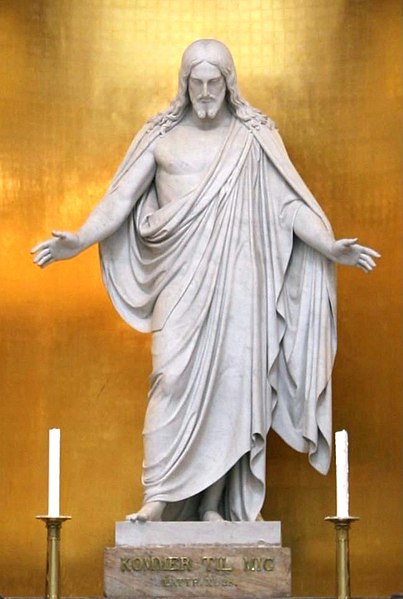
Karl Albert Bertel Thorlvaldsen (Danish-Icelandic, 1770 - 1844)

HIS: (Karl Albert) Bertel Thorvaldsen (Danish pronunciation: [ˌbɛɐ̯dl̩ ˈtɔɐ̯vælsn̩]; ca. 1770 – 24 March 1844) was a Danish-Icelandic sculptor of international fame, who spent most of his life in Italy (from 1789–1838). Thorvaldsen was born in Copenhagen into a Danish/Icelandic family of humble means, and was accepted to the Royal Academy of Arts when he was eleven years old. Working part-time with his father, who was a wood carver, Thorvaldsen won many honors and medals at the academy. He was awarded a stipend to travel to Rome and continue his education.

(klik kanan, Thorvaldsen on Wikipedia)

- Christo


V (Verrochio)

Andrea del Verrochio (Italian, 1435 - 1488)

HIS: Andrea del Verrocchio (c. 1435–1488), born Andrea di Michele di Francesco de' Cioni, was an Italian sculptor, goldsmith and painter who worked at the court of Lorenzo de' Medici in Florence in the early renaissance. Few paintings are attributed to him with certainty, but a number of important painters were trained at his workshop. His pupils included Leonardo da Vinci, Pietro Perugino and Lorenzo di Credi. His greatest importance was as a sculptor and his last work, the equestrian statue of Bartolomeo Colleoni in Venice, is universally accepted as a masterpiece.

(klik kanan: Verrochio on Wikipedia)

- David

B (Bernini)

HIS: Gian Lorenzo Bernini (also spelled Gianlorenzo or Giovanni Lorenzo) (Naples, 7 December 1598 – Rome, 28 November 1680) was an Italian artist who worked principally in Rome. He was the leading sculptor of his age and also a prominent architect. In addition he painted, wrote plays, and designed metalwork and stage sets.

(klik kanan: Bernini on Wikipedia)

- David

D (Donatello)

Donatello (Italian, 1386 - 1466)

HIS: Donato di Niccolò di Betto Bardi (circa 1386 – December 13, 1466), also known as Donatello, was an early Renaissance Italian artist and sculptor from Florence. He is, in part, known for his work in bas-relief, a form of shallow relief sculpture that, in Donatello's case, incorporated significant 15th century developments in perspectival illusionism.

(klik kanan: Donatello at Wikipedia)

- David

M (Myron)

Myron of Eleutherae (Athenian, 480 - 440 BC)

HIS: Myron of Eleutherae (Greek Μύρων) working circa 480-440 BC, was an Athenian sculptor from the mid-5th century BC.[1] He was born in Eleutherae on the borders of Boeotia and Attica. According to Pliny's Natural History, Ageladas of Argos was his teacher.[2]

(klik kanan /pilih "open link in new tab" : Myron at Wikipedia)

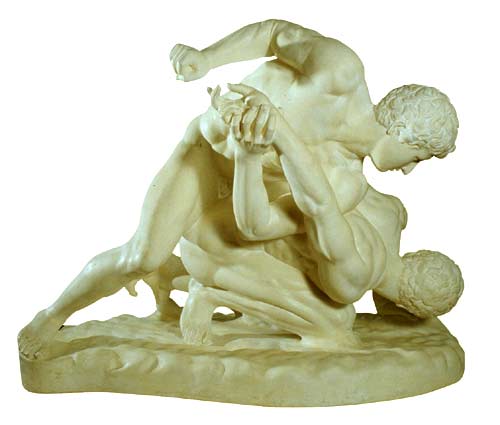
- The Wresler (klik sini utk info patung)


Wednesday, September 28, 2011

C (Canova)

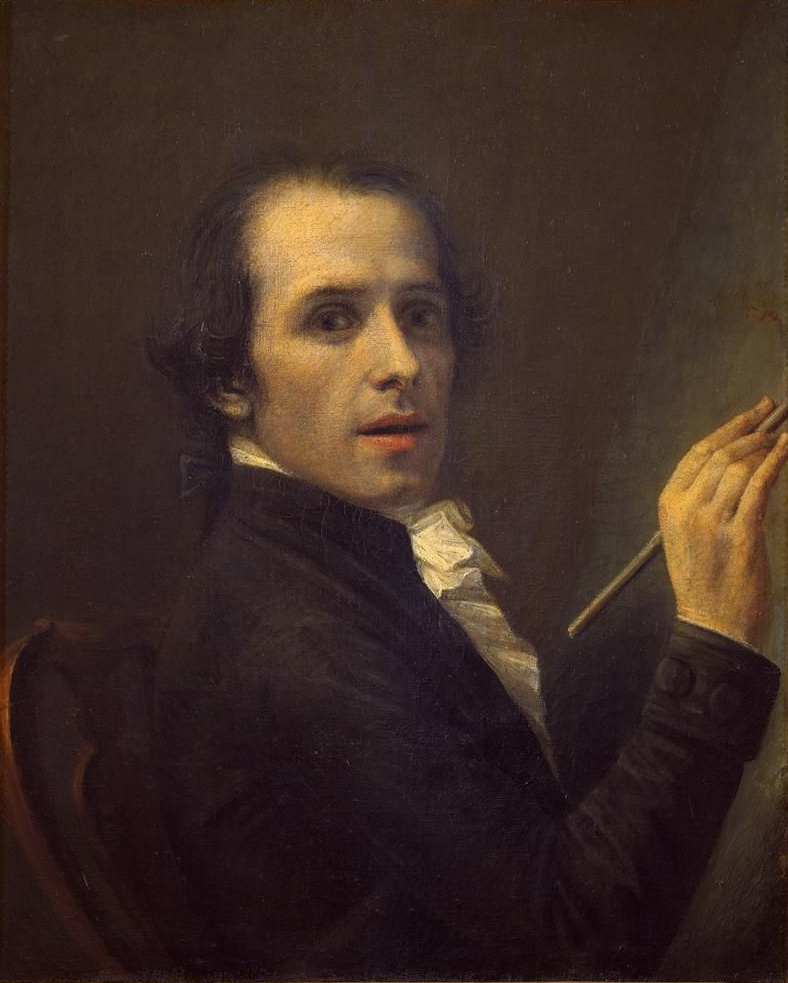
Antonio Canova (Italian, 1757 - 1822)

Antonio Canova (1 November 1757 – 13 October 1822) was an Italian sculptor from the Republic of Venice who became famous for his marble sculptures that delicately rendered nude flesh. The epitome of the neoclassical style, his work marked a return to classical refinement after the theatrical excesses of Baroque sculpture.

(lbh jelas: Canova at Wikipedia)

-Psyché ranimée par le baiser de l'Amour (Psyche revived by the kiss of Love). Marble, 1793.

- The Three Graces

-  

A (Alexandros)

Alexandros of Antioch

HIS: Alexandros of Antioch was an otherwise unknown artist of the Hellenistic age who is best known today for the Venus de Milo (Aphrodite of Milos) at the Louvre Museum in Paris, France. He is known from several ancient inscriptions including one from a now missing plinth that was a part of the Venus de Milo but was removed and "lost" due to museum politics and national pride at the Louvre Museum in the 1820s. The inscription and the style of its lettering cast into doubt the claim that the statue was an original by the master sculptor Praxiteles from Attica.

- Venus de Milo

R (Remington)

Frederick Remington (American, 1861-1909)

HIS: Frederic Sackrider Remington (October 4, 1861 – December 26, 1909) was an American painter, illustrator, sculptor, and writer who specialized in depictions of the Old American West, specifically concentrating on the last quarter of the 19th century American West and images of cowboys, American Indians, and the U. S. Cavalry.

(lbh jelas: Remington at Wikipedia)


- The Bronco Buster